

By Sophia Gonzalez
Current Market Snapshot
Homes in Hollywood are selling for a median price of about $495,000, roughly flat year over year. That puts many middle-income earners — whose income is closer to $60,000 annually — at a steep climb to homeownership. The Zillow Home Value Index shows typical values around $444,000. Homes sit on market approximately two months before going under contract.
On the rental front, the median asking rent is roughly $2,500–$2,600 per month. Year-over-year rents have declined in some ZIP codes even as inventory of rental units grows, including many new luxury and mixed-income buildings downtown.
Downtown Growth and Vacancy Trends
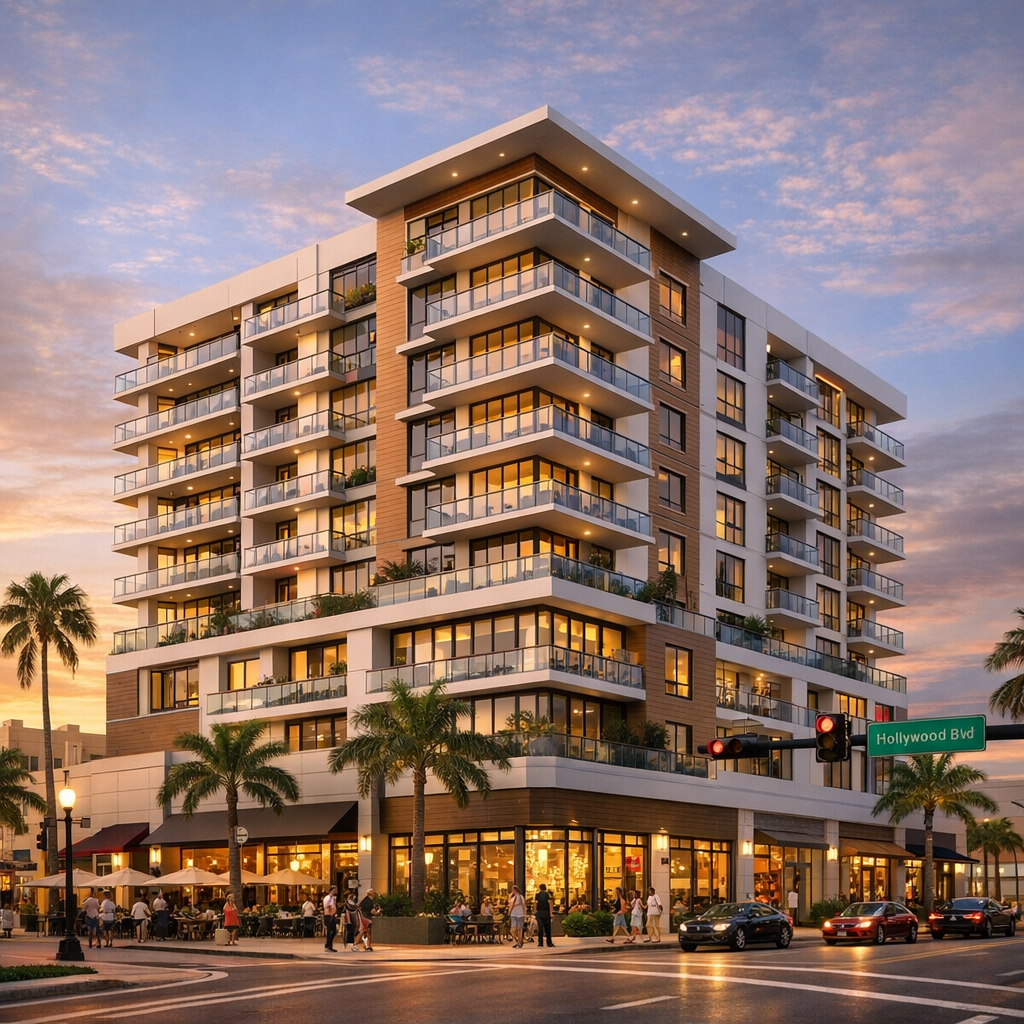
Downtown Hollywood’s residential inventory has surpassed 5,800 multifamily units — up more than 20% over the past period — as several large apartment projects deliver. While absorption remains steady, vacancy across new properties is still elevated due to lease-up periods in recent developments like The Tropic, The Holly by Soleste, and REVV Hollywood. Asking rents in those buildings range from about $2,500 to $3,300 per unit.
Vacancy downtown had been near 17%, but recent reports show it trending downward toward 12% as renters move into new units. That reflects increasing demand even as supply expands.
Affordability & Housing Policy
One of the biggest challenges in Hollywood is affordability. With the median sale price well over $460,000 and median income around $62,000, many earners are cost-burdened — spending more than 30% of income on housing. Workforce housing and mixed-income projects are aimed at easing that pressure.
Local policy has responded. The city’s Affordable Housing Advisory Committee and Live Local Act aim to increase affordable housing in new development. Redevelopment in areas like downtown and corridors such as 441 and Sheridan offers opportunity, especially for mixed-use and mixed-income buildings.
What Buyers Should Know
- Mortgage rates and prices aren’t falling significantly, so total cost over time matters — factor in insurance, maintenance, and potential HOA fees.
- Savings for down payments will need to be substantial — many homes hover near $500,000.
- Explore neighborhoods a little farther from downtown or the coast to stretch your dollar, while keeping commute and amenities in mind.
What Renters Should Know
- You may pay less rent in older buildings, but those often command flexible terms and may lack the newest amenities.
- New units often have higher rents per square foot, so compare monthly cost vs. space.
- Watch for lease-up phases — early occupancy may mean lower promotional rates or more competition for available units.
Looking Ahead: Key Priorities
Residents and city leaders will need to keep pushing for increase in genuinely affordable units, especially for those whose incomes fall below the area’s median. Balancing growth with affordability means incentivizing development that includes workforce housing and mixed-income zoning.
Another priority is managing development along sensitive areas like Hollywood Beach, where state laws like Live Local yield both opportunities and concerns around height, density, and community character. Ongoing public engagement and clear urban design guidelines will be essential.